It was last October when South Manchester Swifts received an email from Vivian Cheung, an MA student at Manchester University. She was studying Electroacoustic composition, specialising in field recording, soundscapes and sound transformation. Her project was on migration and she said that, as she was particularly fascinated by swifts, she wanted to record their calls. Could we help?
There are, of course, no swifts to be found in this country during the winter months and she would have to wait 6 months before there was a chance of hearing one. However, we did have lures which were recordings of swift sounds and suggested that she tried those.
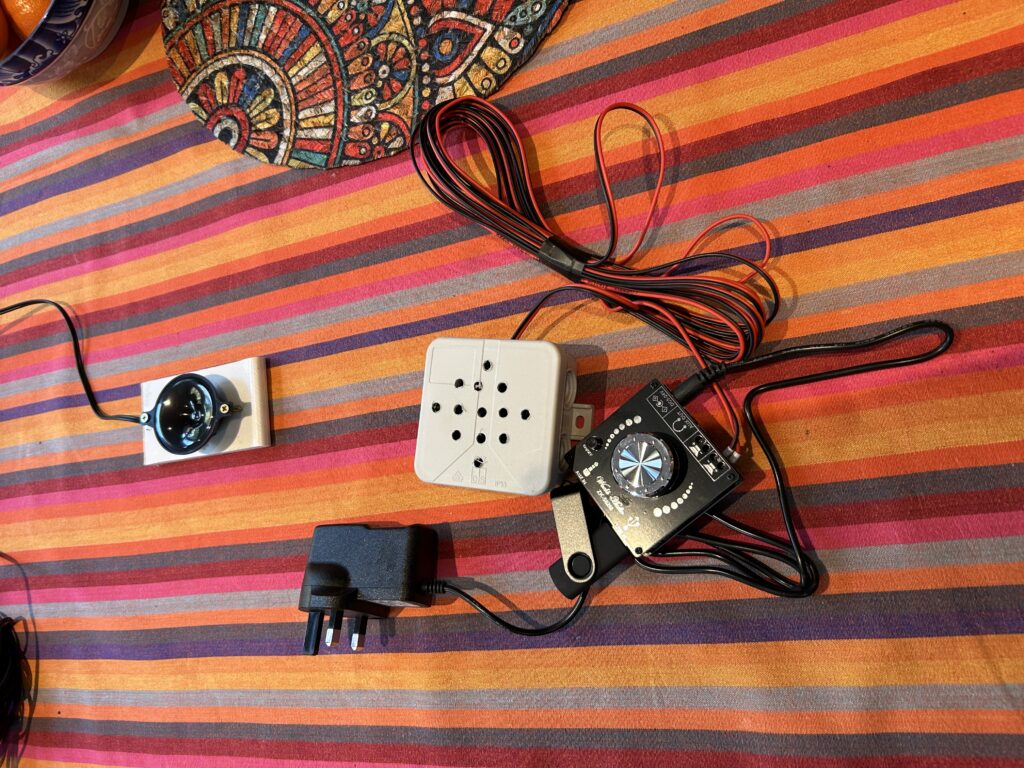
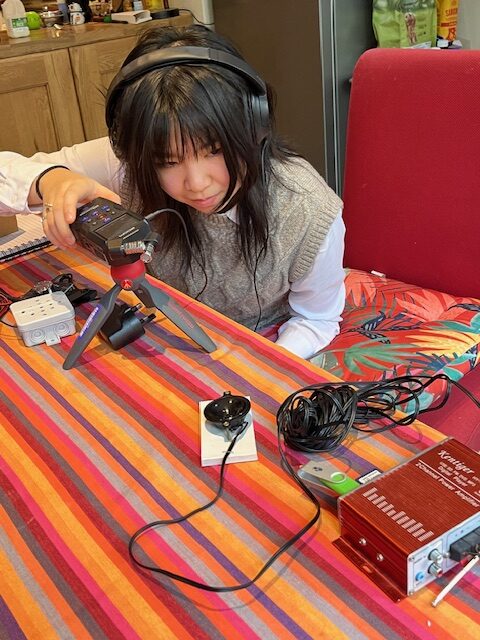
So Vivian came to my house and made several recordings from two callers as a contribution to her project. When it was complete she sent us a copy of ‘Swifting’ with the accompanying programme notes. It was wonderful to hear the swifts combined with so many surreal sounds. Vivian has now received a well-deserved 1st for this piece of sound art.
I must apologise that my garish tablecloth rather detracts from the seriousness of the operation!
Swifting Programme Note
Swifting for stereo fixed media uses data sonification to convey a bird’s migration. We follow the swift’s journey as it takes off, soars through sandy deserts, thriving rainforests, and eventually back home. However, the energy seen in the first section is absent in the end as population numbers dwindle. Swifting conveys the magnitude and beauty of migration, while emphasising our responsibility to protect the birds around us.